The short answer
Black and grey realism uses black ink, diluted greys and your own skin tone to recreate light, shadow and texture, much like a photograph. Strong results depend on high-quality reference images, strong contrast, and enough size for the detail to stay readable as the tattoo ages. Larger pieces may need more than one session. In Cambridgeshire, Sharnia at The Black Dahlia in Littleport near Ely specialises in black and grey realism.
What is a black and grey realism tattoo?
Black and grey realism is a tattoo style that recreates the look of a photograph or sculpture using only black ink, diluted grey tones and the natural colour of your skin for highlights. The goal is believable form, built from convincing light, shadow, depth and texture.
Popular subjects include animals, portraits, statues, religious and mythological figures, and memorial pieces. Every one of them depends on a well-planned composition, not only fine detail.
Why choose black and grey over colour realism?
Black and grey has a timeless, moody quality that suits portraits, wildlife and stone or sculptural subjects especially well. Because it relies on contrast rather than colour, it tends to sit comfortably beside other tattoos and suits most skin tones.
Many people also prefer how black and grey ages. A strong range from deep black to open skin stays readable for longer than subtle mid-tones on their own.
What makes a realism tattoo age well?
The decisions made before tattooing matter as much as the technique on the day.
- Strong contrast: deep blacks next to clean highlights keep the image readable from a distance
- Enough size: faces and fine features need space so detail does not blur together
- Sensible placement: flatter areas such as the forearm, calf, upper arm and thigh hold detail well
- A clear focal point: one main subject reads better than many competing ones
- Good aftercare: protecting the tattoo from friction and sun helps the grey tones settle
What reference photos work best for a realism tattoo?
Realism can only be as good as its reference. Choose sharp, high-resolution photos with clear lighting and visible shadows. Blurry, heavily filtered or dark phone photos make it hard to capture likeness and form.
For portraits of people or pets, a photo taken at eye level with natural light usually works best. Send a few options and let your artist advise which has the strongest light and composition. A reference is a starting point; your artist will adapt it to the size and shape of the placement.
How big should a black and grey realism tattoo be?
Usually bigger than people first imagine. Realism builds detail through gradual shading, and that shading needs room. A portrait squeezed into a small space can lose the features that make it recognisable as the skin ages.
Your artist will recommend a size based on the subject and placement. Taking that advice is one of the simplest ways to protect your tattoo long-term.
How many sessions does a realism tattoo take?
It depends on size, detail and how your skin responds. Smaller pieces may be completed in one sitting, while larger realism such as half sleeves or full portraits is often built over several sessions with healing time in between.
Large custom work at The Black Dahlia typically books three to eight weeks ahead, so get in touch early if you are planning a bigger piece.
Black and grey realism with Sharnia at The Black Dahlia
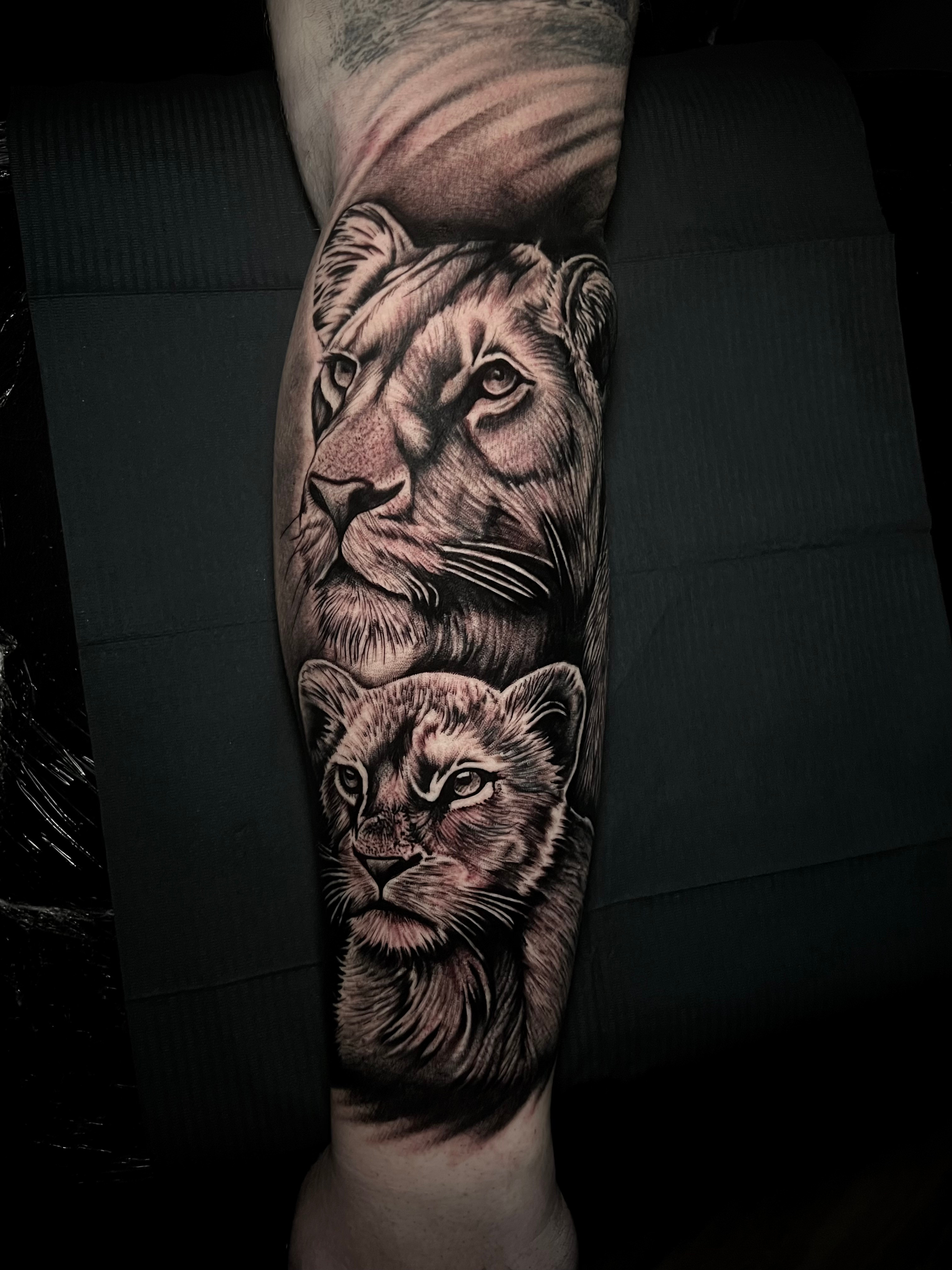
Sharnia is a co-owner of The Black Dahlia and specialises in black and grey realism, blackwork and illustrative realism. Her portfolio includes wildlife such as a lioness and cub, a barn owl and an elephant, as well as sculptural pieces and character work.
The studio is a private, appointment-only space in Littleport near Ely, a straightforward journey from Cambridge and across Cambridgeshire. Send your subject, placement, approximate size and best reference photos to start the conversation.
Frequently asked questions
Does black and grey realism fade?
All tattoos soften over time. Black and grey realism with strong contrast, sensible size and good aftercare, including sun protection, stays readable for many years.
Can you tattoo a portrait of my pet?
Yes. Pet portraits are a popular realism subject. A sharp, well-lit photo taken at the animal's eye level gives your artist the best starting point.
Who does black and grey realism near Cambridge?
Sharnia at The Black Dahlia, a private studio in Littleport near Ely, Cambridgeshire, specialises in black and grey realism and blackwork.
How long does a realism tattoo take to heal?
Initial healing is around two weeks, with full healing taking four to eight weeks depending on size and placement.
Can realism be combined with other styles?
Yes. Realism is often combined with blackwork, illustrative or ornamental elements. Discuss the overall look with your artist so the styles work together.